

A horrifying case of violence against women has shaken Pakistan once again. A 17-year-old student, Eshal Fatima, died at a hospital in Jhang on Tuesday, days after she went missing under suspicious circumstances in what police say may involve gang rape.
Eshal, a Grade 11 student, had disappeared four days before her death. Her family filed a missing persons report at Satellite Town police station shortly after she went missing.
She was brought unconscious to a private hospital by unidentified men who then fled the scene. Due to her critical condition, she was transferred to District Headquarters (DHQ) Hospital Jhang, where she later died during treatment.
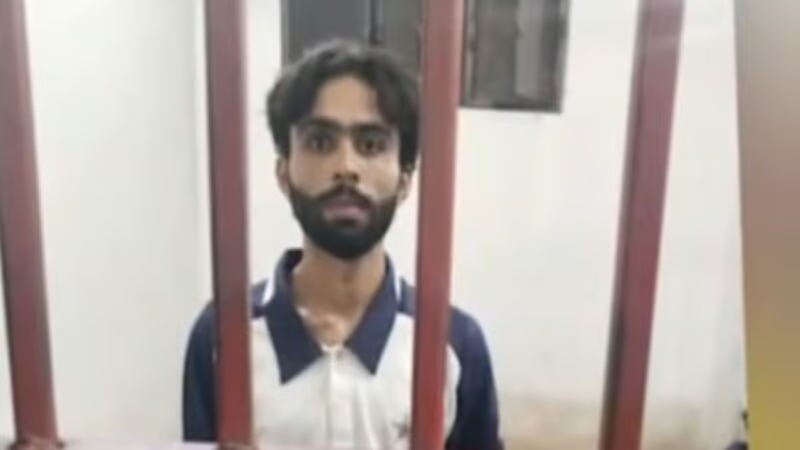
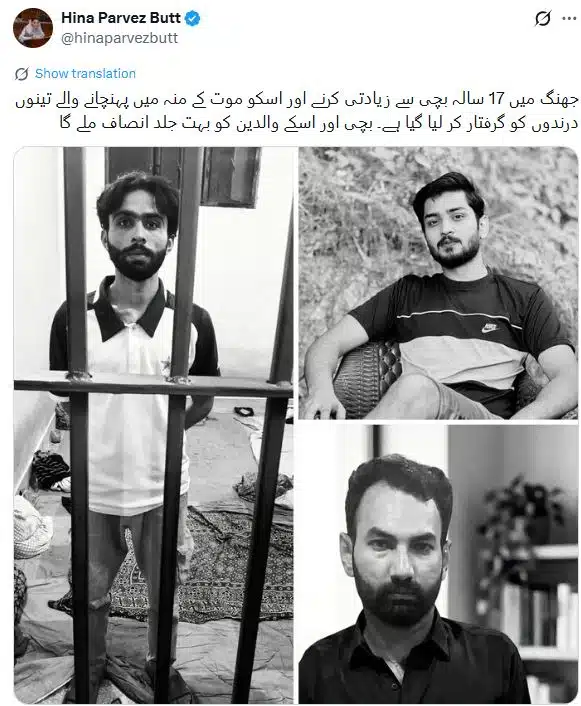
CCTV footage obtained during the investigation showed the victim being brought to the private hospital in a critical state. Based on the footage and other evidence, police arrested three suspects, identified as Haseeb, Amish, and Hassan, and seized the vehicle used in the incident. A manhunt is underway for a fourth suspect, Khalil.
Police said initial evidence and circumstances suggest the possibility of gang rape, but a final determination will be made after medical, forensic, and other investigative reports are received. Under the directives of DPO Jhang Sajjad Hussain, modern investigative techniques and digital evidence were utilized to track the suspects. The victim’s father has appealed to Punjab Chief Minister Maryam Nawaz for justice.
The public is furious. Social media is flooded with grief and anger, with people demanding swift justice and an end to the toxic culture of victim-blaming. People are saying loudly, “It does not matter what a woman is wearing.” It never did. Aisha was a young student going about her life, that is all that matters.
Pakistani celebrities are speaking up, too, and connecting this case to a wider crisis. Actor Yasir Hussain, reacting to the recent acid attack on a female doctor in Quetta, directly addressed Pakistan’s victim-blaming problem, pointing out that the doctor was not wearing revealing clothing, yet was still brutally attacked. His message, “it’s not about the dress but the mindset,” is resonating deeply with the public right now. Mahira Khan called the situation “barbaric” and “evil,” urging both men and women to speak louder and be angrier. Sajal Aly called gender-based violence “a cowardly act driven by misogyny and a fragile male ego.” Ayesha Omar said violence against women is not just physical, it is an attack on their freedom, education, and independence, and called for deep mental reforms across Pakistani society.
Momina Iqbal also came forward and connected the dots with her ongoing battle with her ex.
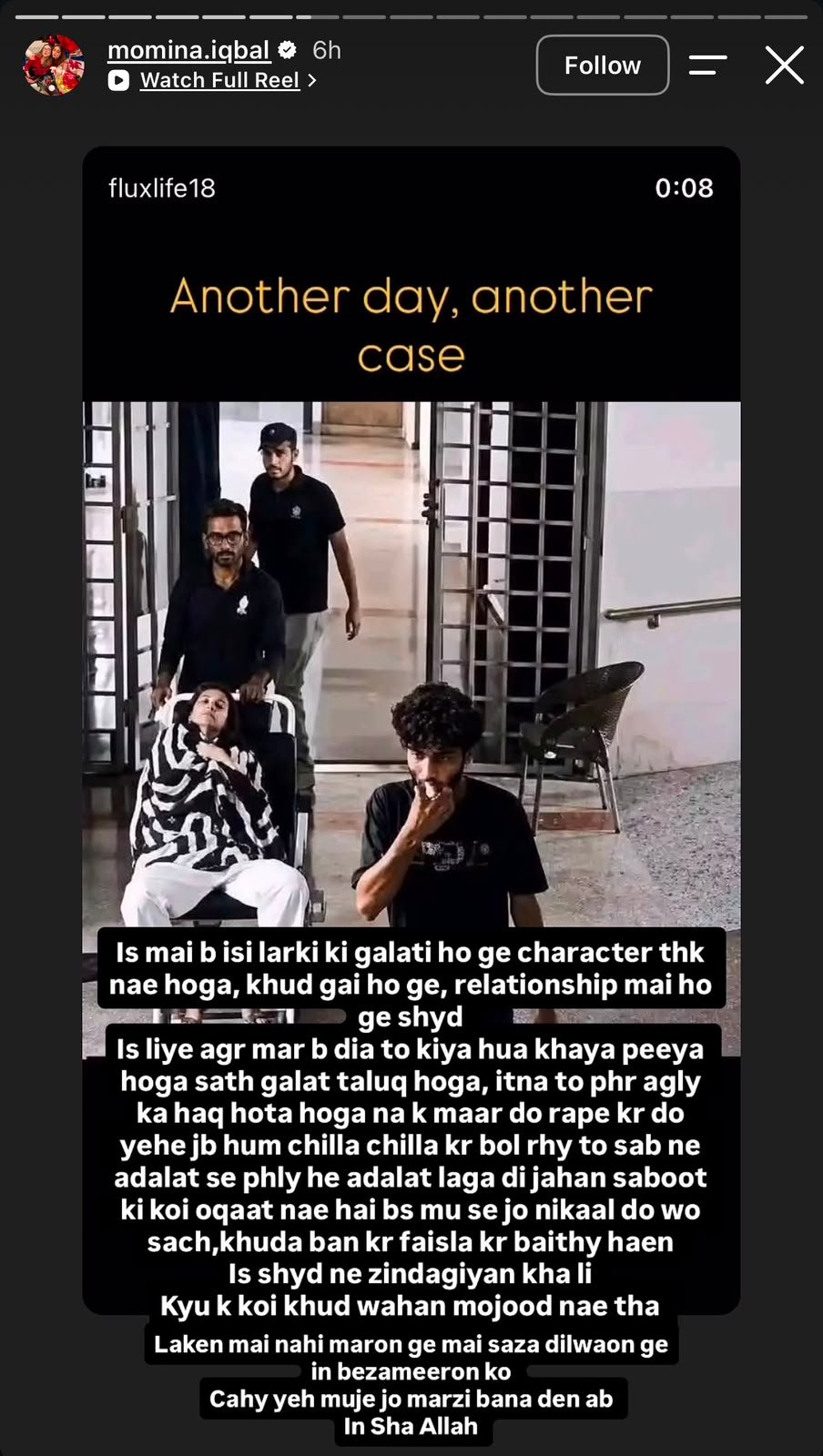
This case comes at a deeply troubling time for women’s safety in Pakistan. Just days earlier, the Supreme Court declared acid attacks more heinous than homicide, and the Lahore High Court upheld death sentences in the 2020 Motorway case, rulings welcomed by activists but clearly not enough to stop the violence. The Jhang case is a painful reminder that stronger laws must be matched by real change on the ground.