
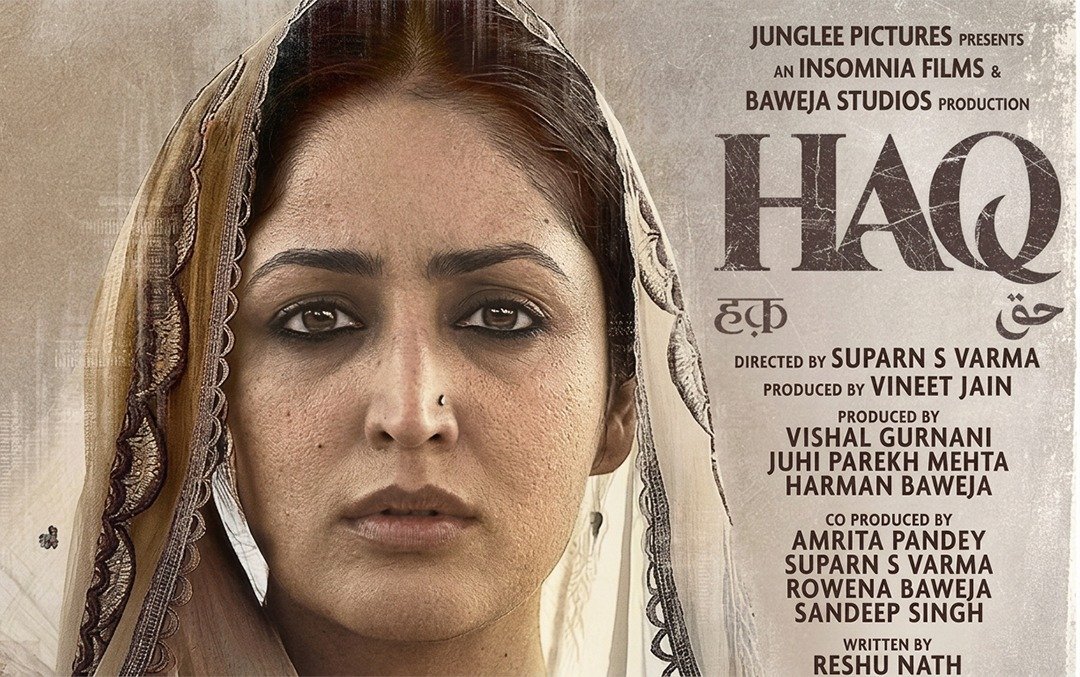


Yami Gautam’s preparation for Haq has become one of the most talked-about aspects of the film after director Suparn S Varma revealed that she spent nearly four months studying the Quran for the role. According to Varma, this was not a superficial exercise or a publicity-driven detail. He said the team wanted cultural, legal, and emotional authenticity, and that Gautam worked on understanding the text, its usage, and the dialect connected to her character. Varma also said the film itself was backed by extensive research, with the team spending about a year and a half studying Islamic law to make sure the story felt grounded and responsible.
That level of preparation matters because Haq is not being positioned as a routine courtroom drama. The film stars Yami Gautam as Shazia Bano, a character inspired by the real-life struggle of Shah Bano Begum, whose legal battle became a landmark moment in the wider debate around women’s rights, maintenance laws, faith, and justice in India. Multiple interviews around the film have made it clear that while Haq is inspired by the Shah Bano case, it is not being presented as a strict biopic. Instead, it blends fiction and reality while trying to preserve the emotional truth of a woman’s fight for dignity.
What makes Gautam’s effort especially notable is that the preparation seems to have gone beyond memorizing lines or copying surface mannerisms. By learning from the Quran and working on dialect and nuance, she appears to have approached the role from within the world of the character rather than from the outside. In a film dealing with religion, law, and social reform, that kind of care becomes even more important, because audiences are often quick to notice when a portrayal feels careless or stereotypical. Varma’s comments suggest that the makers wanted to avoid that trap and aimed for depth rather than dramatized shortcuts.
Yami herself has also spoken about why the story affected her so deeply. She said the script stayed with her because of the quiet strength of the woman at its center. She described the Shah Bano-inspired journey as one of those rare stories that still feel urgent decades later, because the questions it raises about fairness, dignity, rights, and survival remain relevant. She also pointed out that the woman behind the case did not come from privilege or awareness in the way modern audiences might imagine. For Gautam, that made the role not just dramatic, but emotionally and socially meaningful.
The director’s statement also changes how people may view Gautam’s performance in Haq. When audiences hear that an actor spent months engaging with a religious text and that the filmmakers spent well over a year researching the legal and cultural background, it naturally raises expectations. It signals that the performance was built with discipline and respect, not rushed through for effect. Since Haq released in theatres in November 2025 and later arrived on Netflix in January 2026, this behind-the-scenes detail adds another layer to how viewers may now revisit the film.
In the end, the headline about Yami Gautam studying the Quran for four months is not just an interesting trivia point. It reflects a larger creative choice: to treat a sensitive and historically resonant story with seriousness. In an industry where preparation is often discussed in broad terms, this example stands out because it connects directly to the soul of the character and the social weight of the narrative. If nothing else, it shows that Haq was made with the intention of earning authenticity rather than assuming it.