






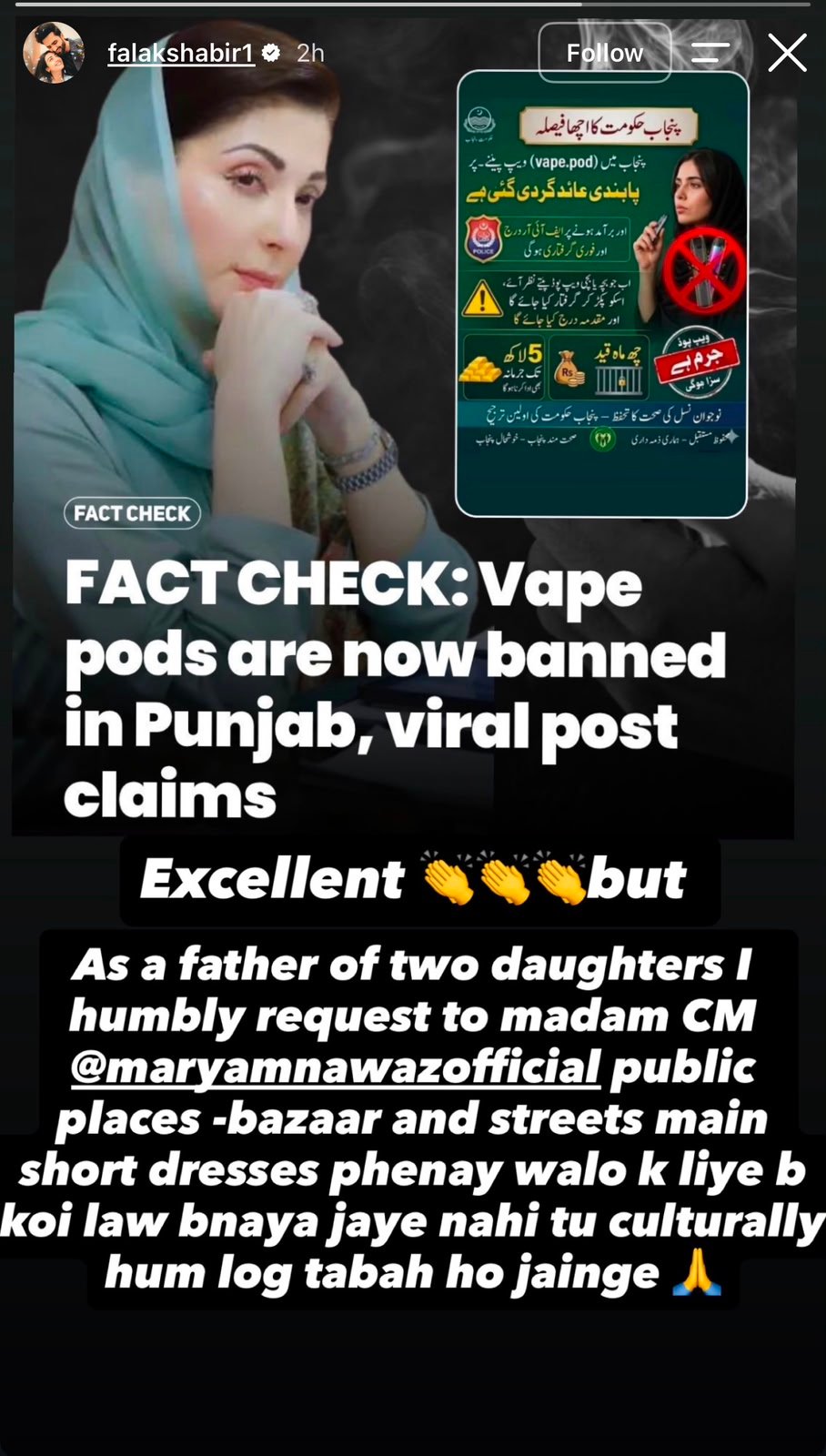
Popular Pakistani singer Falak Shabir has called upon Punjab Chief Minister Maryam Nawaz to make laws regulating the wearing of short dresses in public places. As a father of two young daughters, Falak expressed concern over the growing trend of revealing clothes in markets, parks, and other public areas.
In his recent statement, Falak Shabir said he wants strong rules to protect societal values and the safety of women and children. He believes such laws would promote modesty and respect in Pakistani society. He says, “As a father of two daughters, i humbly request CM Maryam Nawaz to make laws for people who wear short dresses in public place or else we will be destroyed culturally”. As a father, he feels responsible for the future of his daughters, he noted, urging the government to take action against what he sees as inappropriate dressing in public.
His wife, Actress Sarah Khan, is known for her decent dressing, whether it is a drama or a public appearance. She says she wears what is comfortable for her and looks decent as well.
Pakistan is a conservative Muslim country where cultural and religious norms emphasise modesty. While there are no national laws strictly banning short dresses, many people support traditional values of covering oneself properly in public. Schools and some institutions already enforce dress codes for teachers and students.
This appeal has sparked debate on social media. Supporters say it will help maintain decency and reduce harassment. Critics argue that personal freedom and individual choice should be respected, and such laws could limit women’s rights. They point out that Pakistan has no official dress code for citizens in public spaces.
CM Maryam Nawaz and the Punjab government have not yet responded officially. The issue highlights the balance between cultural traditions and modern lifestyles in Pakistan. Many parents share Falak’s worries about the influence of Western fashion on young generations.
Experts suggest awareness campaigns and community dialogue may be more effective than strict laws.